
How to Buy Website Traffic on AdsCompass and What It Costs per Click
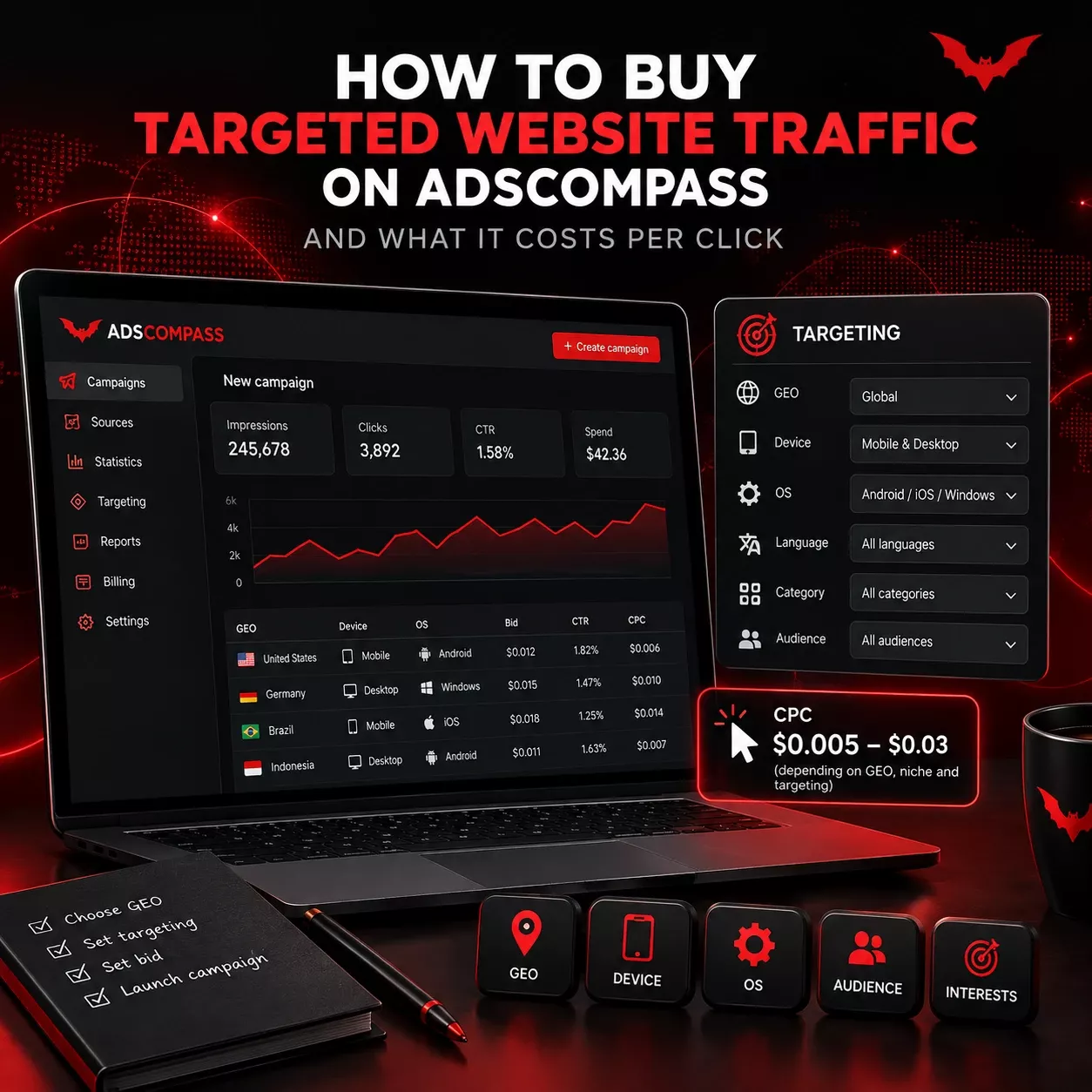
Three moves buy targeted website traffic on AdsCompass: fund an advertiser account from $50, pick a format, then bid from $0.0003 for a pop click, $0.0008 for in-page push or $0.001 for push. Those floors cost one click, not a thousand impressions. Banner, native, video pre-roll and the Telegram formats invert that and charge per thousand instead. Targeting is set before launch and moderation takes about ten minutes. Above the floors nobody publishes a rate, because a first-price auction settles what a click really costs, and average winning bids by GEO sit in the traffic calculator.
What You Get When You Buy Website Traffic on AdsCompass
You get impressions and clicks on ad placements across sites and apps in the AdsCompass publisher network, delivered to real users who chose to visit those sites. The network has been a member of the IAB since 2019 and serves 8 billion impressions and 60 million clicks a day across more than 5,000 publishers and 15,000 advertisers.
Every publisher site passes pre-moderation before it can carry advertising. Advertisers who buy traffic for their website here work from an advertiser account, registered separately from the publisher account. A site owner who already monetises with AdsCompass needs a second registration to buy.
The billing unit for website traffic is set by the format, not by the visit: on pop, push and in-page push you are charged when a user clicks, so an untouched impression costs nothing. Anyone looking to buy real website traffic starts here, because the billing unit decides what a wasted impression costs.
On banner, native and video you are charged for a thousand impressions regardless of what happens next, so the click-through rate sits on your side of the deal. Creative quality and placement fit decide how many of those impressions become visits.
Buying organic traffic and buying ad traffic are not the same purchase
Buying organic traffic and buying ad traffic are two different purchases, and AdsCompass sells only the second one. Services selling "organic traffic" or "SEO traffic" packages mostly deliver simulated sessions: scripted visits that move the counter in analytics and produce nothing behind it.
A minority use incentivised human visitors, which is closer to real but carries no intent toward your offer. Advertising traffic starts with a real person clicking a creative and can be measured against conversions instead of page views. If organic search growth is the goal, that work belongs to content and technical optimization instead.
Ad Formats and What Each One Charges For
AdsCompass sells eight formats to advertisers, three of them billed per click and five per thousand impressions. The split matters more than the format names. It decides what a wasted impression costs you and which metric you optimize towards.
| Format | Pricing model | What you pay for | Minimum bid |
|---|---|---|---|
| Pop | CPC | One click | $0.0003 per click |
| In-page push | CPC | One click | $0.0008 per click |
| Push | CPC | One click | $0.001 per click |
| Banner | CPM | 1,000 impressions | $0.001 per 1,000 impressions |
| Telegram Rewarded Post | CPM | 1,000 impressions | $0.01 per 1,000 impressions |
| Native | CPM | 1,000 impressions | $0.1 per 1,000 impressions |
| Video Pre-Roll | CPM | 1,000 impressions | $0.1 per 1,000 impressions |
| Telegram Rewarded Video | CPM | 1,000 impressions | $0.1 per 1,000 impressions |
The three CPC formats, pop, in-page push and push, price a single click and not a thousand impressions. Pop and push behave like performance channels from the first dollar, while banner, native and video behave like reach channels where creative quality decides whether impressions turn into visits.
I checked the bid floors in the table above, along with the moderation timings and payment terms in this article, against the dashboard. Floors are not permanent: ad formats, bid floors, moderation policy and payout terms have all changed during my twelve years at AdsCompass, so confirm the current number in the dashboard before you build a budget around it.
The two Telegram formats appeared in February 2025 and run inside Telegram mini apps. The reward mechanic there means the user opts into watching the post or the video. Both are available to advertisers only, since publishers monetise six formats out of the eight.
What Website Traffic Costs and Why There Is No Fixed Rate
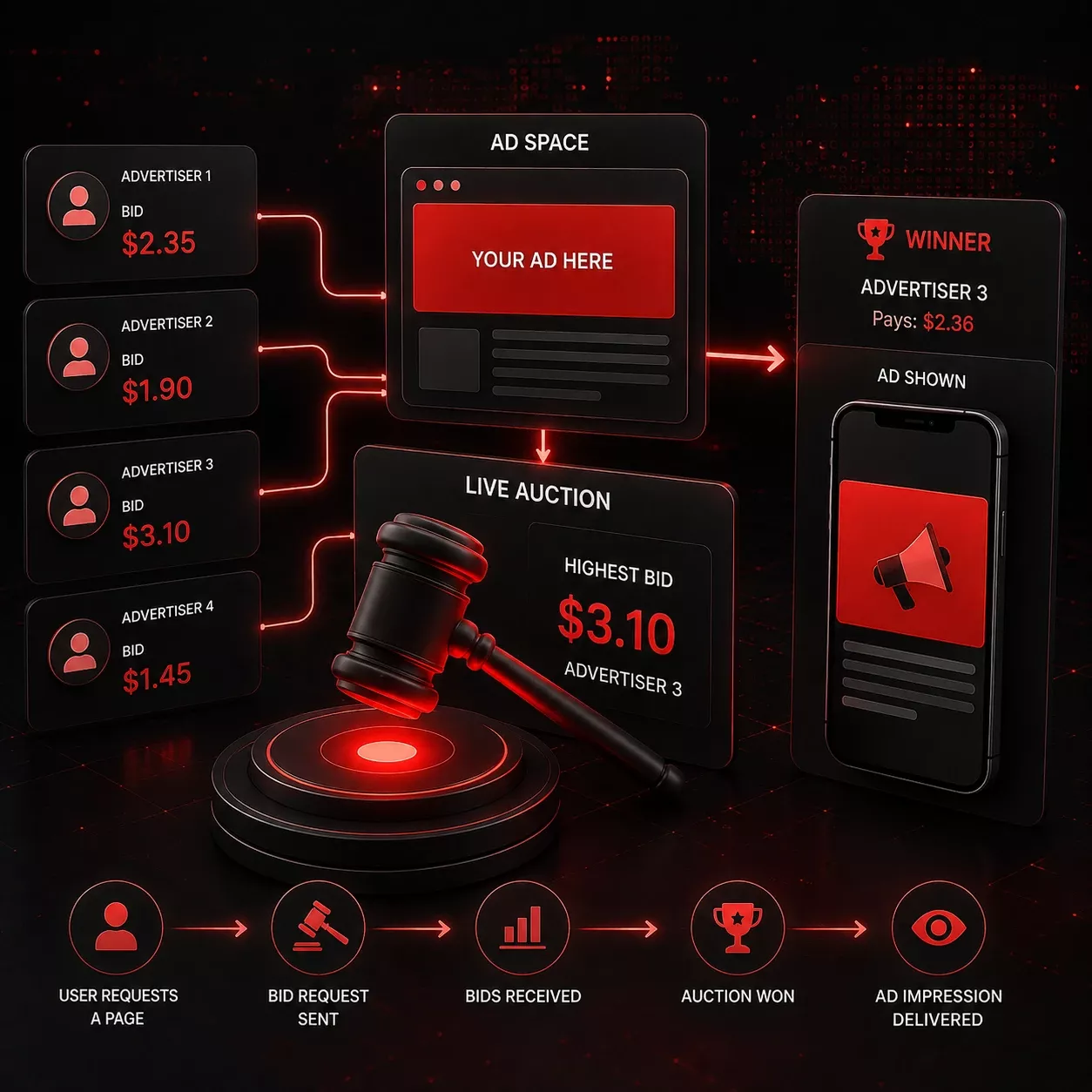
It costs from $0.0003 to buy website traffic on AdsCompass, and above that floor there is no price list, because the cost is settled by a first-price auction: the winning advertiser pays exactly the bid they entered. Part of the market runs second-price auctions, where the winner pays a fraction above the runner up.
Under first-price your bid is both your ceiling and your invoice, so the number you enter is the number you are charged when it wins. That removes the cushion a second-price auction gives a careless bid.
The price of a click is set by the GEO you target, the audience and devices inside it, and the format you buy. These three pull in different directions. A pop click in a low competition country and a push click in a Tier 1 country are not comparable purchases.
An estimate is available before any spend. The AdsCompass traffic calculator shows volume and average bids by GEO and format, updating from auctions that have already closed, and its recommendation shifts with your goal: maximum click volume, or the cheapest clicks for that GEO and format.
A minimum bid and a bid that wins volume are two different numbers, and the gap between them is where most first budgets die. The floors are entry thresholds, not going rates: a campaign parked at $0.0003 in a competitive GEO loses most of the auctions it enters. Take the opening bid from the calculator average for your GEO, then move it per source once the tracker has data.
The cheapest website traffic is not automatically the most effective. Pop carries the lowest minimum bid of any format on AdsCompass, which makes it the usual entry point for testing an offer at volume. It is also the format where the gap between a click and an engaged visitor is widest. Judge the purchase on cost per action once a tracker is connected.
Targeting That Narrows the Traffic Down to Your Audience
AdsCompass filters delivery by GEO and city, device, operating system and version, browser and version, ISP or mobile carrier, browser language, connection type, and by retargeting audiences you build yourself. Over 200 countries are available, and targeting goes down to city level inside a country and does not stop at the national border.
Two of these filters carry more weight than buyers expect. OS and browser version targeting decides whether your landing page renders for the user you just paid for, and a campaign bleeding budget on old browsers reads like a creative failure until the version breakdown explains it. ISP targeting earns its place when an offer converts on carrier billing, or when one provider dominates the market you are entering.
Retargeting audiences handle the return leg. Lists can be uploaded ready made or collected by rules, with a storage period that sets how long a user stays in the audience. Collection runs through the SST pixel on your own pages.
Buying US website traffic
There is no separate US website traffic package on AdsCompass, since the United States is selected as a GEO like any other and filtered further by mobile or desktop. Its available volume and average bid are checked in the traffic calculator before a campaign goes live.
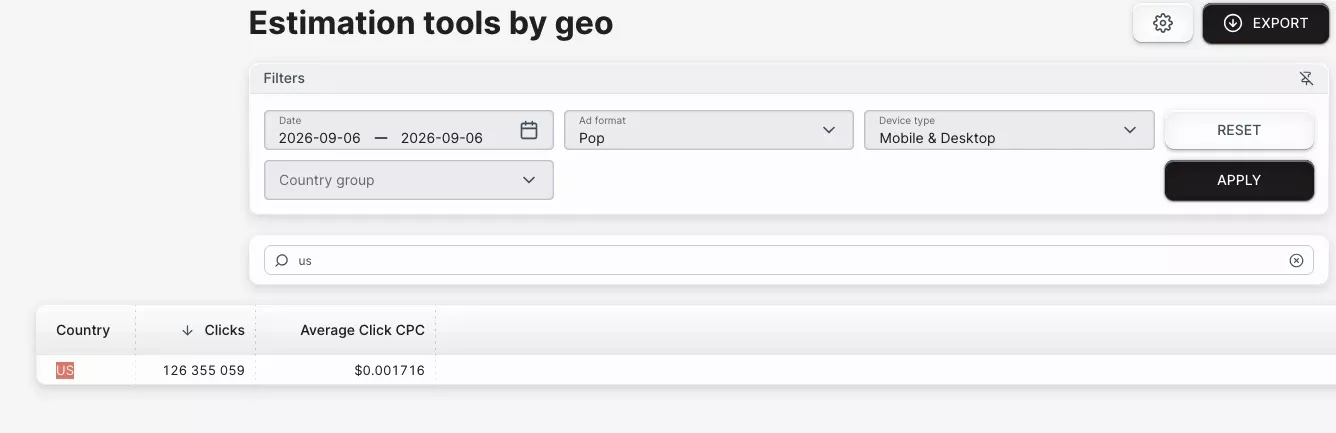
Advertisers who buy USA website traffic should expect a more expensive auction than in lower competition regions, because the bids there come from everyone chasing the same audience. Run the calculator for the exact combination you plan to buy. US pop and US push are different numbers with different volumes behind them.
Filters That Cut Bot and Proxy Clicks Before You Pay for Them
Website traffic quality on AdsCompass is defended on three levels: every publisher site passes pre-moderation before it can carry ads, ad network antifraud filters bot traffic on an ongoing basis, and the advertiser adds their own filters inside the campaign. That third layer is the one buyers underuse, and the only one they fully control.
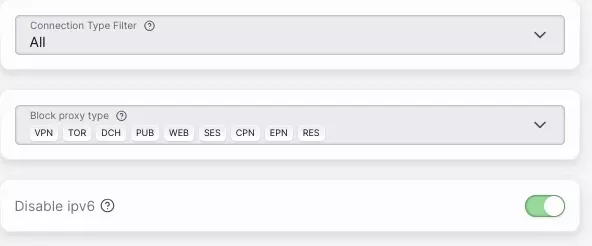
Four advertiser-side filters inside the campaign do most of that work. Excluding IPv6 addresses cuts a share of automated traffic, while excluding proxy connections removes users hiding their real location, which matters whenever you are paying a GEO premium.
A frequency limit per unique IP per day stops the same user from being charged to you repeatedly. Blacklists and whitelists by IP, ISP and source ID let you remove a specific source the moment its data tells you something is wrong.
Where to buy website traffic comes down to the same question every time: does the source report at source ID level. Judge it on whether it shows that data and lets you exclude what you do not want. Anything you cannot cross check against your own tracker is bought on trust.
Minimum Deposit and a Realistic First Test Budget
The minimum you can deposit to buy website traffic on AdsCompass is $50, and the recommended test budget is $500. Fifty dollars gets a campaign live and confirms the setup works; the larger figure is what buys enough completed events for the numbers to mean anything.
Advertisers who buy bulk website traffic can work the volume out from the floors, but only as a ceiling. Real bids sit above them, and the calculator average for the GEO is the figure worth planning against.
There is no default daily budget and no floor, so the advertiser sets it. During the initial test the rule worth using is the test budget divided by the days allowed for it. That puts $500 across five days at $100 a day for one campaign.
Past that stage the funnel of GEOs, formats and offers is too wide for a single number, and the budget follows what the tracker reports. Deposits are made in USD through Capitalist, USDT TRC-20, BTC, PayPal, Visa and Mastercard, Apple Pay and Google Pay, Paxum, WebMoney or wire transfer.
How Long Moderation Takes and Why Campaigns Get Rejected
Moderation on AdsCompass takes about ten minutes, sometimes longer, and the campaigns that fail it fail for one of three reasons. It is the last gate between a funded balance and live traffic. Everything before that gate is a short sequence, and it is the whole of how to buy website traffic here:
- Register an advertiser account, separately from any publisher account you hold.
- Deposit from $50 in USD through any of the supported payment methods.
- Choose the format and with it the pricing model, CPC or CPM.
- Set GEO, devices, and the targeting and exclusion filters the campaign needs.
- Upload creatives and the campaign link, then check the link opens correctly in a browser.
- Submit for moderation and expect a decision inside the ten minute window.
The first of those three causes is a campaign that violates the terms and conditions. The second is a malformed campaign link, usually a tracking template broken by a stray parameter or an unclosed macro. Open the link in a browser before you submit it.
The third is a link that triggers a high number of alerts on VirusTotal, which catches advertisers who bought a domain with history they never checked. Violence, weapons and drugs are not accepted in any format.
Tracking Which Source Actually Brought the Conversion
Attribution runs through S2S postback plus platform macros, which pass campaign ID, creative ID, price, IP, source ID, user agent and click ID into your tracker. Without that connection you are buying clicks blind, and source ID is the macro every later bid change depends on.
CPV Lab and CPV One have a documented integration guide. Keitaro, Binom, Voluum and RedTrack connect through postback templates instead, which takes a few minutes longer and works the same way once running. Inside the platform, statistics update in real time, and reports break down by day and by hour with export.
Adjusting Bids by Source ID After the First Data Arrives
Once a test has run, bids can be changed per individual source rather than per campaign, through source ID bidding on AdsCompass. Lists of source IDs are uploaded in advance and a rule is assigned to them: raise the bid where the conversion rate justifies it, cut it where clicks arrive and conversions do not.
On a first-price auction that granularity matters, because a raised bid applies to every impression the campaign wins until it changes again. A campaign wide increase pays the higher price on weak sources too.
Source ID bidding is backed up by three campaign controls. Daily and hourly budgets cap exposure while a source is still unproven. The spend mode decides whether the budget spreads evenly across 24 hours or goes out as fast as the auction allows, which changes what your first day of data looks like. Frequency per unique IP keeps a small audience from absorbing a disproportionate share of the budget.
FAQ
Is there a free trial before you buy website traffic?

Does buying website traffic affect organic search rankings?
How much website traffic does $500 buy?
Is buying website traffic on AdsCompass self-serve only, or is there a manager?
Is there any cashback on advertising spend?
Is there a referral programme for advertisers?